









The Plateau Isn't Your Failure—It's Your Biology Fighting Back
I've watched the same pattern repeat hundreds of times.
Someone starts a weight loss program. The first month is incredible. The scale moves. Clothes fit differently. Energy improves. They feel like they've finally cracked the code.
Then week six hits.
The scale stops moving. The same meals that worked last month stop working this month. They're doing everything right, but the results vanish.
Most programs tell them to eat less and move more. Most clients assume they're doing something wrong. Most people quit right here.
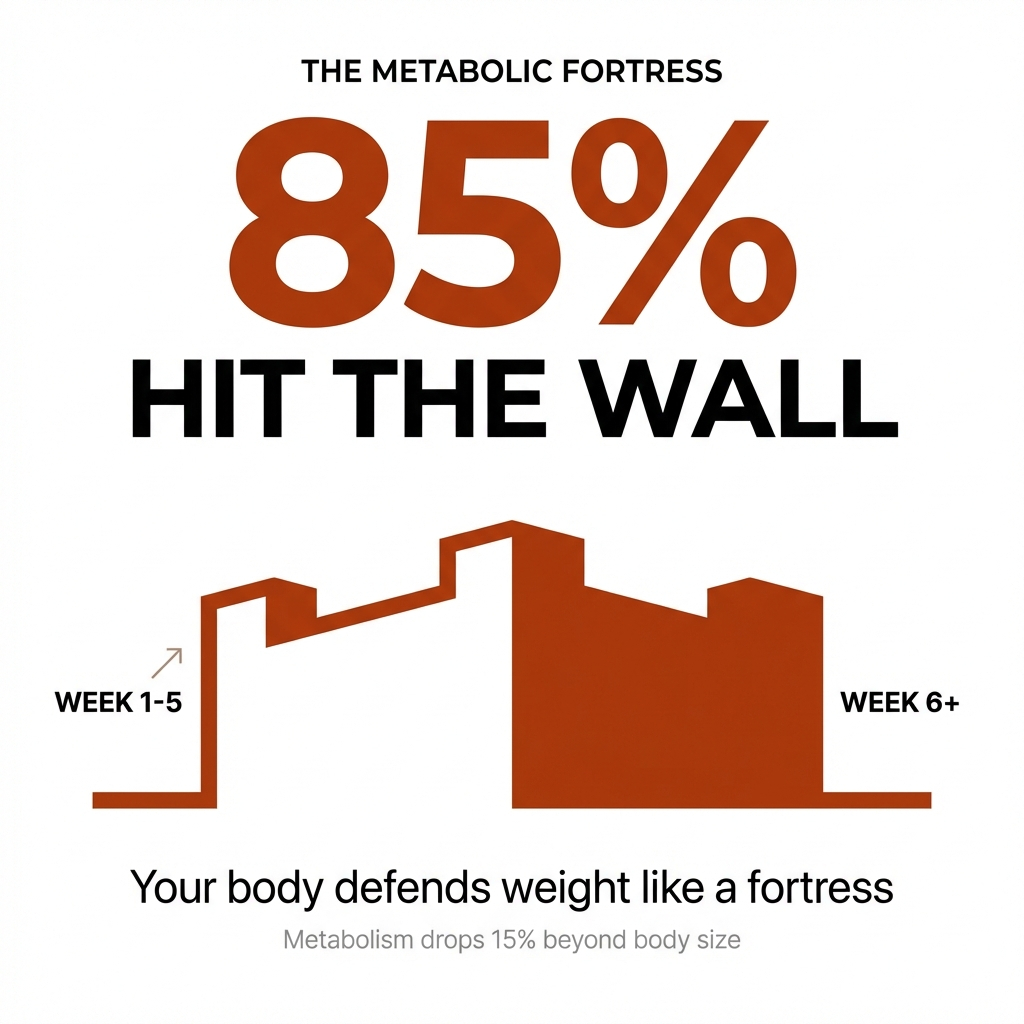
But the plateau isn't a character flaw. It's a biological response that affects approximately 85% of people who lose weight. Your body isn't broken. It's doing exactly what it's designed to do—protect you from what it perceives as starvation.
This is the phase where most weight loss programs abandon you. This is also the phase where real transformation becomes possible.
Your Body Defends Weight Loss Like a Threat
When you lose weight, your body doesn't celebrate. It panics.
Total energy expenditure decreases by approximately 15% following just a 10% weight loss, even after adjusting for your new body weight. Your metabolism doesn't just slow down because you're smaller. It slows down more than it should based on your size alone.
This is called metabolic adaptation. Your body is actively working against further weight loss.
The adaptation happens fast. Within two weeks of controlled underfeeding, your body begins reducing energy expenditure by an average of 120 calories per day. That might not sound like much, but it compounds. Over weeks and months, this creates a gap between what you think you're burning and what you're actually burning.
The larger the weight loss, the larger the adaptation. Someone who loses 16% of their body weight experiences measurable metabolic adaptation that directly predicts how long it will take to reach their goal weight. The last pounds aren't just harder psychologically. They're harder metabolically.
Your body is defending fat stores like a fortress.
This isn't a design flaw. It's survival wiring. Your body doesn't know you're trying to fit into smaller jeans. It thinks you're facing famine.
The Hunger Hormones Turn Against You
Metabolic slowdown is only part of the problem.
Weight loss triggers a cascade of hormonal changes that make hunger more intense and satisfaction harder to achieve. Leptin drops. GLP-1 decreases. Ghrelin increases. These aren't abstract lab values. They translate directly into how you feel at the dinner table.
Research shows that larger metabolic adaptation during weight loss is accompanied by a greater drive to eat. Your body isn't just burning fewer calories. It's actively increasing your appetite to compensate for the deficit.
This explains why willpower feels impossible during a plateau. You're not weak. You're fighting a coordinated biological response designed to restore your previous weight.
I experienced this myself before I found a sustainable approach. I would start strong, see results, then hit a wall where hunger became overwhelming. The cravings weren't occasional. They were constant. I assumed I lacked discipline.
I was wrong. My body was doing exactly what bodies do when they lose weight without the right metabolic support.
The Plateau Phase Is Where Most Programs Fail You
Here's what happens in most weight loss programs:
Initial weight loss triggers metabolic adaptation within weeks. Hunger hormones shift against you. Energy expenditure drops beyond what your new body size would predict. The scale stops moving despite perfect adherence to the program.
The program tells you to eat even less. Move even more. Try harder.
But the problem isn't effort. The problem is that the intervention doesn't address the underlying metabolic and hormonal dysfunction that makes sustained weight loss difficult.
Maintaining weight loss long-term is successful in only 10% to 20% of individuals. The recidivism rate back to pre-weight loss levels exceeds 80%. These aren't personal failures. These are predictable outcomes when you fight biology with behavior alone.
The plateau phase is where the conventional approach breaks down. It's also where targeted metabolic intervention becomes essential.
What Worked for Me: Appetite Without Cravings
Before I found peptide therapy, I followed the same cycle I saw in almost everyone around me. Start a diet. Lose weight. Hit a plateau. Gain it back.
The difference with peptides wasn't dramatic at first. It was subtle but fundamental.
I still had an appetite. I could still taste my food. I still felt hungry at appropriate times. But the cravings disappeared. The constant mental negotiation about whether to eat something vanished. I wasn't whiteknuckling my way through meals.
This distinction matters more than people realize. Hunger is normal. Cravings are your hormones fighting you. When you address the hormonal component, weight loss stops feeling like a battle and starts feeling like a process.
The quality of life difference was immediate. I wasn't starving myself. I wasn't eliminating foods I enjoyed. I wasn't relying on willpower to override biological signals.
I was working with my body instead of against it.
The Protocol That Addresses What Diet and Exercise Cannot
When a client hits a plateau in our practice, I don't tell them to eat less or exercise more. I adjust their protocol based on what their body is communicating.
Sometimes that means adjusting medication dosing. Sometimes it means implementing a reset cycle—taking them off the medication for four weeks to let their body recalibrate, then restarting the protocol. This approach addresses the metabolic adaptation that makes plateaus inevitable with conventional methods.
Peptide therapy targets the hormonal and metabolic pathways that diet and exercise alone cannot reach. GLP-1 receptor agonists work by regulating appetite, slowing gastric emptying, and improving insulin sensitivity. They address the hunger hormone dysregulation that makes sustained weight loss nearly impossible through willpower alone.
The results reflect this difference. Clinical trials show average weight reductions of 14.9% with semaglutide and 20.2% with tirzepatide. These aren't short-term losses. These are sustained outcomes that persist because the intervention addresses the underlying biology.
But the protocol matters as much as the medication. Medical oversight ensures safety. Medical-grade-approved peptides guarantee you're getting what you think you're getting. Customized dosing accounts for individual metabolic variation.
Without these components, you're guessing. With them, you're addressing the specific mechanisms that cause plateaus in the first place.
The Fear of Coming Off Medication
One conversation comes up repeatedly once clients reach their goal weight: What happens when I stop?
The fear is understandable. They've finally achieved results that eluded them for years. The idea of going back to how things were before feels terrifying.
This is where protocol design becomes critical.
We don't stop medication abruptly. We taper gradually. Instead of dosing every seven days, we extend to every ten days, then fourteen, then three weeks, then monthly. This gradual reduction allows the body to adjust without triggering the rebound hunger and metabolic slowdown that causes weight regain.
The tapering process demonstrates something important: the hunger doesn't come back with a vengeance when you've addressed the underlying metabolic dysfunction. Clients have spent months eating smaller portions. Their body has adapted to a new baseline. As long as they continue eating appropriate portion sizes and stop when full, they maintain their results.
The medication creates the conditions for sustainable change. The tapering protocol ensures that change persists after the medication ends.
What Happens After the Weight Comes Off
Weight loss is never just about the number on the scale.
Clients who lose significant weight often discover secondary concerns they didn't anticipate. Loose skin becomes visible. Body contours change in unexpected ways. The person in the mirror looks different enough that it takes time to integrate the new identity.
This is where body contouring, skin tightening, and resurfacing enter the conversation. The weight loss revealed what was underneath. Now we address the physical markers that remain.
But the deeper work is identity integration. Someone who carried extra weight for years doesn't just lose pounds. They lose a familiar version of themselves. Family dynamics shift. Work relationships change. People treat them differently.
We incorporate energy work to help clients open up to who they're becoming. The physical transformation is measurable. The identity transformation requires space and support.
This is why sustainable weight loss requires more than a prescription. It requires a system that addresses the physiological, emotional, and identity shifts that happen when someone's body changes significantly.
Who This Approach Works For
The clients who thrive with our protocols share specific characteristics.
They've tried multiple approaches. Keto worked until it didn't. Calorie counting produced results that disappeared six months later. They're done chasing temporary fixes.
They recognize that their weight affects more than their appearance. It impacts their energy, their relationships, their professional performance, their quality of life. They see the ripple effects clearly.
They're ready to commit to a sustainable approach, not another diet they can't maintain long-term. When I ask clients if they can eat a certain way for the rest of their life, and the answer is no, I tell them they'll gain the weight back. The clients who succeed understand this distinction.
They're willing to invest in medical-grade intervention with proper oversight. They understand that cutting corners on peptide sourcing or skipping medical supervision isn't worth the risk.
The clients who don't succeed are usually price shopping across clinics or following the next trend without commitment. They're looking for the cheapest option, not the most effective one. They rarely stay long enough to see results.
Sustainable transformation requires alignment between what you want and what you're willing to commit to achieving it.
The Plateau Is Where Real Transformation Happens
Most people quit when the scale stops moving. They assume they've failed. They go back to old patterns. They gain the weight back.
But the plateau isn't the end of progress. It's the beginning of the phase where your body needs targeted metabolic support to push through the adaptive response that stops most people.
This is where medical intervention becomes non-negotiable. This is where peptide therapy addresses what diet and exercise cannot. This is where protocols designed for metabolic adaptation create outcomes that willpower alone never could.
The plateau affects 85% of people who lose weight. It's not a personal failure. It's a biological certainty.
The question isn't whether you'll hit a plateau. The question is whether you'll have the right support to push through it when you do.
I've seen what happens when clients have that support. Their family relationships improve. Their work performance increases. Their energy returns. They look in the mirror and recognize themselves again.
The transformation isn't just physical. But it starts with addressing the physiology that makes sustainable weight loss possible.
Your body isn't fighting you because you're doing something wrong. It's fighting you because it's doing exactly what it's designed to do. The solution isn't more willpower. It's better intervention.
The plateau is where most programs abandon you. It's also where real transformation becomes possible with the right protocol.
Ready to push through the plateau that's kept you stuck? Visit www.ignitemedicalgroup.com to learn how our medical-grade peptide protocols and metabolic support can help you achieve sustainable results.