









Your Body Has a Weight Regulation System Most Diets Completely Ignore
I watched the same pattern repeat for years. Someone would start a new diet, lose weight, feel amazing for a few months, then gain it all back.
I saw it in clients. I saw it in friends. I saw it in myself.
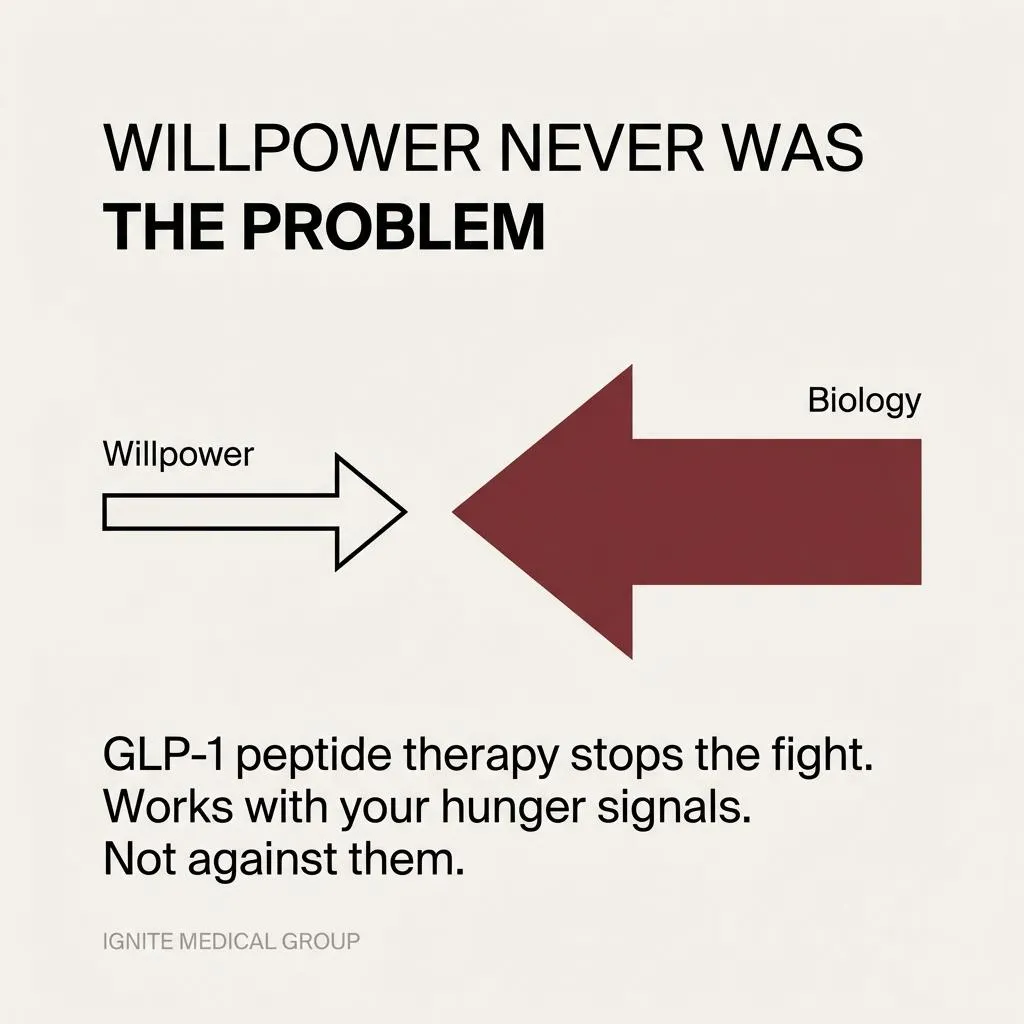
The explanation was always the same: lack of willpower, not trying hard enough, falling off track. But after seeing this cycle repeat hundreds of times, I started questioning whether willpower was ever the real problem.
What if the entire approach was working against how our bodies actually function?
The Biological System Traditional Weight Loss Ignores
Your body has a built-in weight regulation system. It's called the GLP-1 system, and it controls three critical functions most weight loss programs never address:
How quickly your stomach empties after eating.
How your brain interprets fullness signals.
Whether you experience hunger as a manageable sensation or an overwhelming craving.
GLP-1 hormones operate through what researchers call a dual-system architecture. They work simultaneously in your gut and your brain, creating a coordinated feedback loop that regulates appetite, satiety, and energy storage.
When this system functions properly, you feel satisfied after reasonable portions. You can distinguish between actual hunger and boredom. You don't obsess about your next meal.
When it doesn't, no amount of willpower compensates for the biological signals telling you to eat more and store fat.
Why Calorie Restriction Alone Backfires
Here's what happens when you lose weight through traditional calorie restriction:
Your body interprets the reduction as a threat. It doesn't know you're trying to fit into smaller jeans. It thinks you're facing a famine.
So it adapts.
Research shows that people who lose weight through calorie restriction alone can experience metabolic adaptation where their body burns 50-700 fewer calories per day than before. Some women in clinical studies saw their resting metabolic rate drop by nearly 700 calories.
That means it took them over two months longer to reach their weight loss goals compared to someone without this adaptation.
And once they stopped restricting? The weight came back faster than it left.
This isn't a willpower problem. It's a biological defense mechanism.
Your body is doing exactly what it's designed to do—protect you from starvation by making every calorie count and every pound harder to lose.
What I Noticed When I Stopped Fighting My Biology
Before I understood how GLP-1 worked, I experienced the same frustrating cycle everyone else did. I could white-knuckle my way through a diet for a while, but the cravings always won eventually.
When I started using peptide therapy that works with the GLP-1 system, something fundamental changed.
I still had an appetite. I still enjoyed food. I could still taste everything I ate.
But the cravings disappeared.
That constant background noise of thinking about food, planning my next meal, fighting the urge to snack—it just stopped. I wasn't starving myself. I wasn't miserable. I was eating smaller portions because I felt genuinely satisfied, not because I was forcing myself to stop.
For the first time, weight loss didn't feel like a battle against my own body.
How GLP-1 Peptide Therapy Works Differently
Traditional weight loss tells you to eat less and move more. It treats your body like a simple math equation: calories in versus calories out.
GLP-1 peptide therapy addresses the regulatory systems that control hunger, satiety, and fat storage.
Here's what happens at the biological level:
Your stomach empties more slowly after meals. This creates sustained physical fullness that lasts hours, not minutes.
Your brain receives clear satiety signals. The hormone communicates directly with brain regions that control appetite, so you feel satisfied with less food.
Your ghrelin levels decrease. Ghrelin is the hunger hormone your stomach produces when it's empty. GLP-1 therapy reduces ghrelin, which means you're not constantly fighting biological hunger signals your body is designed to obey.
This isn't about overriding your biology with willpower. It's about working with the systems your body already has.
The Difference Between Appetite and Cravings
One of the most common things clients tell me after starting peptide therapy is this:
"I'm still hungry at mealtimes, but I don't think about food constantly anymore."
That distinction matters.
Appetite is your body's natural signal that it needs fuel. Cravings are the intrusive thoughts, the obsessive planning, the inability to focus on anything else until you eat.
Appetite is manageable. Cravings hijack your entire day.
GLP-1 therapy doesn't eliminate hunger. It eliminates the constant mental noise that makes sustainable eating feel impossible.
You can still enjoy meals. You can still taste your food. You can still eat socially without feeling deprived.
You just stop when you're full instead of when the food is gone.
What Happens When Clients Hit a Plateau
Weight loss isn't linear. Even with peptide therapy, clients hit plateaus where the scale stops moving despite continued adherence.
When that happens, we have two primary interventions:
Adjust the dosing. Sometimes the body adapts to the current dose, and a small increase reactivates the satiety signals.
Reset the system. For clients with higher BMIs who've reached the top of the dosing schedule with nowhere left to titrate, we take them off the medication for four weeks. This allows their body to recalibrate, then we restart the protocol from the beginning.
That reset protocol surprises people. They assume stopping the medication means immediate weight regain.
It doesn't.
By the time someone hits a plateau, they've been eating smaller portions for months. Their stomach has adapted. Their eating patterns have changed. The four-week break doesn't undo that progress—it gives their system a chance to reset so the medication works effectively when we restart.
The Fear Nobody Talks About
The most common question I get from clients who've lost significant weight isn't about loose skin or exercise or maintenance.
It's this: "What happens when I stop taking the medication?"
They're terrified the hunger will come back with a vengeance. That they'll regain everything they lost. That this is just another temporary fix.
I understand that fear completely. They've been burned by every other approach that promised lasting results.
Here's what we do:
We don't just stop the medication abruptly. We taper gradually over several months.
Instead of dosing every seven days, we move to every ten days. Then every fourteen days. Then every three weeks. Then once a month.
This gradual reduction shows clients that their hunger doesn't return the moment they reduce the dose. They've spent months eating smaller portions. Their stomach has physically adapted to smaller meal sizes. Their eating patterns have fundamentally changed.
As long as they continue eating until they're satisfied instead of until the food is gone, they maintain their weight loss.
The medication gave them space to build new habits without fighting constant cravings. The tapering protocol proves they can maintain those habits independently.
Who This Approach Works For
The clients who thrive with peptide therapy share specific characteristics:
They've tried multiple approaches that failed. Keto worked until it didn't. Calorie counting produced temporary results. Every diet ended the same way—with the weight coming back.
They see how weight affects more than their appearance. It impacts their energy, their relationships, their professional confidence, their willingness to engage in activities they used to enjoy.
They're ready to commit to sustainable change, not another quick fix. They understand this isn't a 30-day challenge or a crash diet. It's a structured approach to changing their relationship with food.
The clients who don't thrive? They're price shopping. They're hopping between clinics and online platforms trying to save a few dollars. They're chasing the next trend without committing to the full protocol.
Sustainable transformation requires structure, not just motivation. It requires medical oversight, not DIY experimentation. It requires commitment to the process, not just excitement about the outcome.
The Question You Should Ask Yourself
Every time someone starts a new diet, I ask them one question:
"Can you eat like this for the rest of your life?"
If the answer is no, they'll gain the weight back.
It doesn't matter how effective the diet is short-term. It doesn't matter how much weight they lose in the first month. If the approach isn't sustainable, the results won't be either.
GLP-1 peptide therapy works because it addresses the biological systems that make sustainable eating difficult in the first place.
It removes the constant mental battle with cravings. It creates genuine satiety instead of forced restriction. It works with your body's regulatory mechanisms instead of fighting them.
You're not starving yourself. You're not miserable. You're not counting every calorie and fighting constant hunger.
You're giving your body the signals it needs to regulate appetite naturally.
That's the difference between another failed diet and actual transformation.
What Sustainable Weight Loss Actually Looks Like
At Ignite Medical Group, we only use Medical grade approved peptides under full medical oversight. Not because we're cautious, but because unregulated sources mean you don't know what you're getting.
Medical oversight isn't just about safety. It's about customizing the protocol to each client's specific needs, adjusting dosing when plateaus occur, and providing the support structure that makes long-term success possible.
Weight loss isn't just about the number on the scale. It's about energy levels, relationship quality, professional confidence, and willingness to engage fully in life.
Because sustainable transformation isn't just physical. It's the alignment between how you feel inside and what you see reflected back.
If you're ready to stop fighting your biology and start working with it, let's talk.
Visit www.ignitemedicalgroup.com to learn more about our approach to sustainable weight loss through medically supervised peptide therapy.